Water softeners in Hartford, WI
A water softener for Hartford's shallow-well water
Hartford's water comes from five city wells sunk into glacial sand and gravel. The City calls it typically 18 to 22 grains, while samples the state took in February 2026 put it nearer 23 to 26. Either figure is very hard water, and a whole-home softener for it gets priced on a single phone call.
Call (262) 829-5961Mon to Fri, 7am to 5pm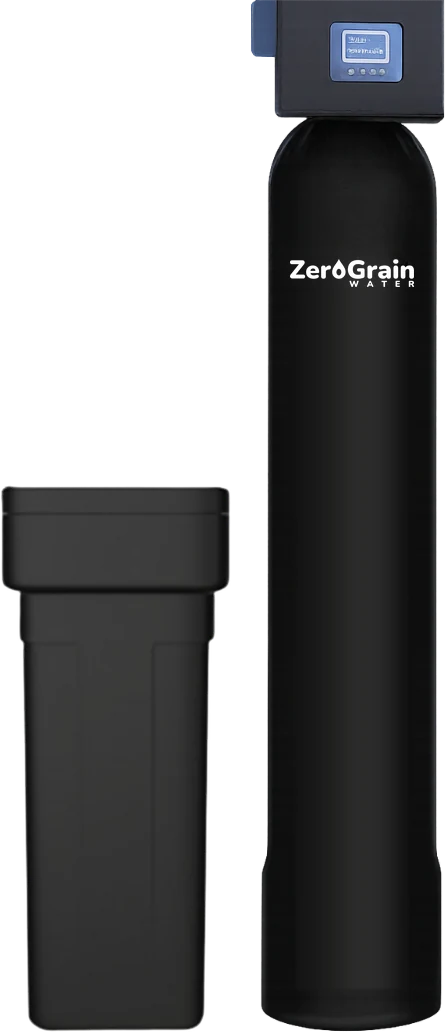
What is included
- Whole-home water softener, brine tank included
- RO drinking-water faucet at the kitchen sink, part of the package, never sold by itself
- Hookup by a Wisconsin-licensed plumbing contractor
- Your faucet tested first, then checked again until hardness shows zero
- A single price before you hang up, and no salesperson at the house
- Quote calls weekdays from 7am to 5pm
Hartford water hardness
Source: City of Hartford Sewer Utility chloride FAQ, revised January 2023; Wisconsin DNR compliance sampling, Hartford waterworks
Get your price
Send your details and we will call you with one price. Nobody comes to the house to sell you anything.
Five shallow wells in glacial sand and gravel
Hartford Utilities pulls the city's water from five wells between 50 and 180 feet deep. Every one of them is set in the shallow sand-and-gravel layer the last glacier left near the surface, and the water arrives at a steady 50 degrees, winter or summer.
Hardness is dissolved calcium and magnesium, and by every official count, Hartford's well water carries a lot of it.
18 to 22 grains, or 23 to 26?
Look for hardness in Hartford's water utility report and you will not find it. The figure people quote comes from the City's sewer utility, whose chloride guidance, last revised in January 2023, calls city water typically 18 to 22 grains per gallon.
Then there are the state's numbers. Wisconsin DNR compliance samples drawn at the five wells in February 2026 measured 390 to 450 milligrams per liter, roughly 23 to 26 grains. Two official sources, two different answers.
Both answers are very hard on the US Geological Survey's scale, where that band starts at 180 milligrams per liter, or about 10.5 grains. What settles the gap for one house is a reading at that house's faucet, taken before any pipe is touched.
The sewer utility's request: reset to 20
The same 2023 guidance asks residents to reset their softeners to 20 grains, pointing out that factory presets reach as high as 30. Each grain of setting beyond what the water holds means more salt bound for the treatment plant.
That request was written next to the City's own 18 to 22 figure. With the state's 2026 samples reading higher, the number from your own faucet is the surer guide to what your house gets.
The guidance also favors demand-initiated softeners, and that is the only type we supply.
From your call to a Hartford price
Ring us on a weekday between 7am and 5pm. We ask for your address, or a note that the house draws from its own well, how many live there, and which part of the house the water line comes into, old softener or not. From that we size a whole-home softener and name one price, then and there.
No salesperson comes by. The visit that follows is the installation itself. A Wisconsin-licensed plumbing contractor takes any old unit out, stands the new softener up with its brine tank, connects the bypass, runs the drain line down to the drain leaving an air gap, and mounts an RO drinking faucet by the kitchen sink.
Before the plumber packs up, your faucet is checked again, and the job is not done until hardness shows zero.
Inside the city, or out in the Towns of Hartford, Erin and Addison
Inside the City of Hartford, home to 15,966 people by the state's 2026 estimate, tap water comes from Hartford Utilities and its five wells. Both official hardness figures, the City's and the state's, were written about that water.
A Hartford mailing address can also belong to a house in the Town of Hartford, the Town of Erin or the Town of Addison. Out there a house may pump from a well of its own, one that neither the City nor the state has ever put a number on.
That is why a Hartford call opens with the pipe rather than the postmark. Utility water starts the quote from the published figures; a private well starts it from your lab report, or from the plumber's first faucet reading when no report exists.
What a softener changes in Hartford water, and what it leaves alone
A softener exchanges calcium and magnesium, the minerals that make water hard, for sodium, or for potassium when the brine tank is filled with potassium chloride. The brine recharges the resin each time the unit regenerates, and that rinse leaves through the drain line, which is why the sewer utility takes an interest in how softeners are set.
Hardness is the one job, and the plumber judges it by a single number: zero at your faucet once the work is done. A softener is not built to deal with bacteria or nitrate, which matters most in the Towns, where the Wisconsin DNR's advice to test a private well for bacteria at least once a year holds whatever stands in the basement.
Common questions
Which Hartford hardness number is right?
Both are official: 18 to 22 grains is the City's typical figure from its 2023 guidance, while the state's February 2026 well samples came in around 23 to 26. A reading at your own faucet settles it for your house.
Should I reset my current softener to 20?
That is what the City's sewer utility asks of residents in its 2023 chloride guidance, which notes presets from the factory can reach 30 grains. The state's 2026 samples ran above the City's figure, so a reading at your faucet is worth having before you change anything.
How deep are Hartford's city wells?
Between 50 and 180 feet. All five draw from shallow glacial sand and gravel, and the water comes up at 50 degrees in every season.
Do I buy the drinking-water faucet separately?
No. A Hartford quote covers the RO faucet at the kitchen sink along with the whole-home softener, and the faucet is never sold by itself.
Who does the plumbing?
A Wisconsin-licensed plumbing contractor. The softener drains through an air gap, and Wisconsin's plumbing law, chapter 145, covers that joint, so we size the softener, supply it and arrange the installation while the contractor does the hands-on part.
Did Hartford's water get harder between 2023 and 2026?
Neither source says so. The 2023 range is the sewer utility's description of typical city water; the 2026 numbers are compliance samples the state drew at the five wells that February. They are different kinds of measurement, and the softener is set from neither: the plumber reads your own faucet first.
Is the Town of Erin or the Town of Addison covered?
Yes, both, along with the Town of Hartford. A house out there on its own well is sized from its lab report; with no report, the price still comes on the call, and the plumber's first reading at the faucet sets the softener.
Do I need a hardness test before I call?
Not for city water: the City's 18 to 22 grains and the state's 23 to 26 are both on hand already. On a well in the Towns, a lab report helps but is not required, because the plumber reads the faucet before anything is connected.